
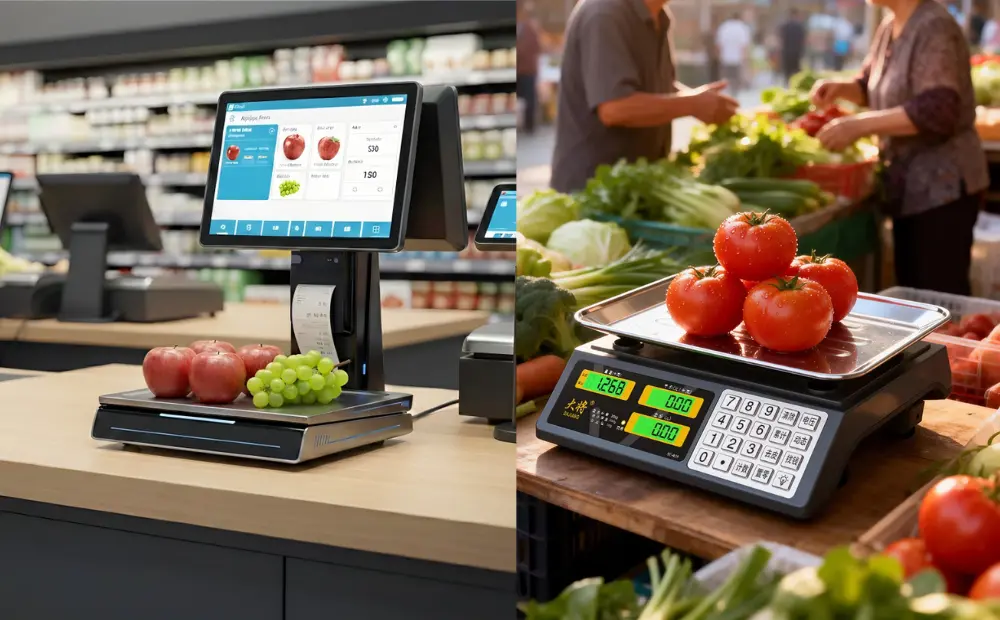
Every checkout delay costs money. Fresh items cause most of them. Cashiers guess PLUs. Lines grow. Errors slip through. Traditional weighing scales keep this cycle alive. AI POS scales promise a fix—but at a higher price.
This guide helps you make a clear decision. We compare the two systems in terms of cost, accuracy, and ROI. You will also learn the right time to upgrade and when manual scales still make sense for supermarkets.
What Is an AI POS Scale?
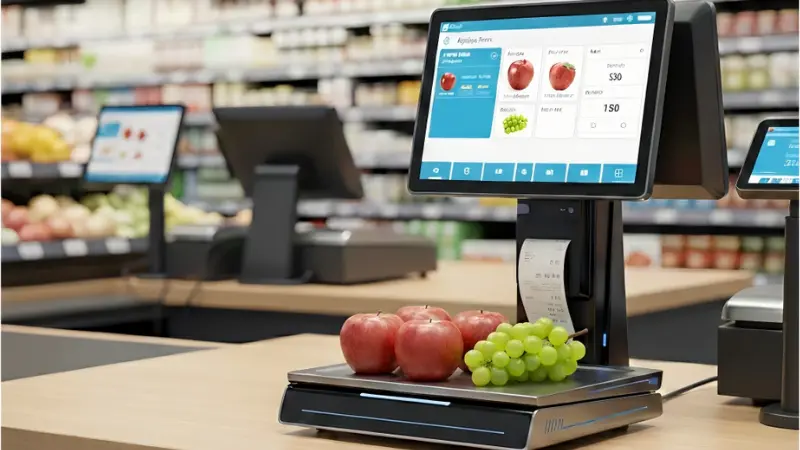
An AI POS scale is a checkout scale that identifies fresh items, weighs them, and sends the correct price to the POS system on its own. It removes the need for manual PLU entry at checkout.
An AI-integrated weighing POS scale combines three steps into one flow:
- Product identification through a camera
- Weight check through the scale
- Automatic price transfer to the POS system
What makes it different is not the scale.
It is the decision process. The system recognizes the item first. Then it confirms the weight. Then it applies the price. All in seconds.
How AI POS Scales Work in Supermarkets
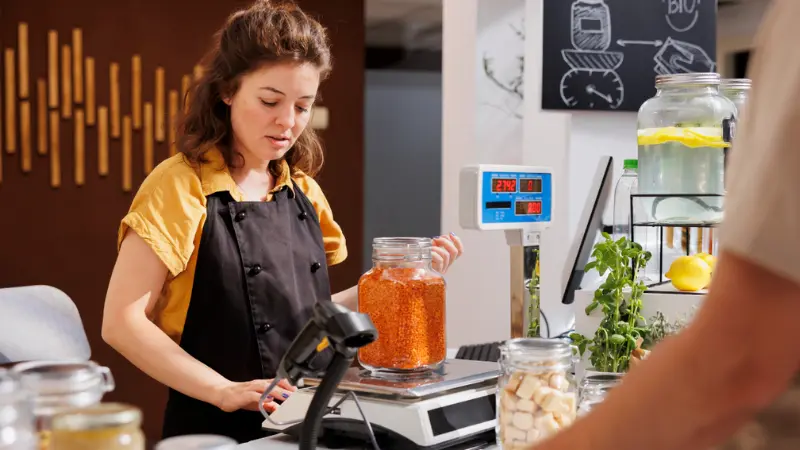
AI POS scales use a built-in camera above the scale. The camera captures the item placed on it. The system compares the image with known product data. The system assigns the correct SKU and price.
Once confirmed:
- The price appears at checkout
- The POS system updates instantly
- No PLU lookup is required
This flow reduces pauses. It also limits pricing mistakes during busy hours.
Where AI POS Scales Are Used Today
AI POS scales fit best where fresh items slow down checkout.
Supermarkets use them in:
- Produce sections: Fast pricing for fruits and vegetables
- Bulk food areas: Fewer errors with look-alike items
- Fresh meat and deli counters: Clear weight and price control
- Assisted and semi-self checkout lanes: Faster flow with less staff input
An AI weighing POS scale supports both staff-led and customer-assisted checkout. It keeps pricing consistent across stores. It also reduces training time for new cashiers.
What Is a Traditional Weighing Scale?
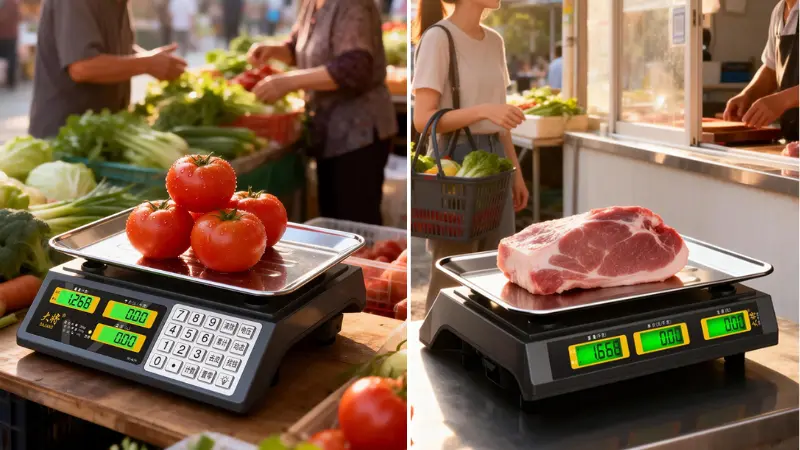
A traditional weighing scale measures the weight of an item at checkout. It does not identify the product on its own.
The cashier controls the process:
- The item goes on the scale
- The cashier searches for the correct PLU
- The price enters the POS system manually
Accuracy depends on the person at the register. Speed depends on experience. Consistency varies by shift and staff skill.
Where Traditional Weighing Scales Are Used
Traditional weighing scales still serve many supermarkets.
They appear most often in:
- Produce checkout lanes: Standard pricing for common items
- Legacy service counters: Meat, deli, or bakery areas
- Smaller or low-volume stores: Fewer SKUs and slower traffic
These systems work best where item variety stays limited and checkout pressure stays low.
Operational Limits Retailers Face
Traditional scales place the workload on staff. That creates several limits:
- PLU memorization dependency: New staff need time to learn codes
- Slower checkout during rush hours: Lookups pause the line
- Higher error risk: Similar items cause wrong pricing
These limits do not mean failure. They show where traditional weighing scales struggle as store traffic grows.
This is why many supermarkets review them when speed, labor, and accuracy become priorities.
How AI Product Recognition POS Scales Work (Behind the Scenes)
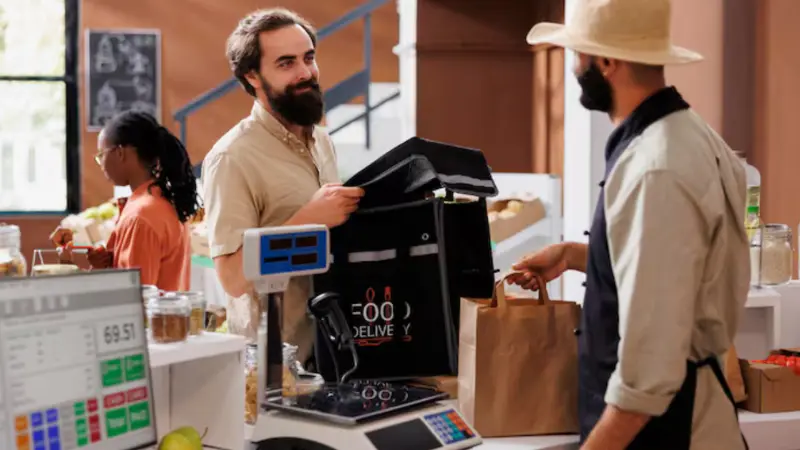
AI POS scales automate decisions that cashiers once made by hand. They identify the item, confirm the weight, and apply the price in one flow. This section explains how that process works at checkout.
AI Vision & Product Recognition
A product recognition POS scale uses a camera above the weighing area. The camera captures the item the moment it touches the scale.
The system compares the image with stored product data. It looks at shape, color, and size. This helps it tell similar items apart, such as different apples or tomatoes.
Once the system identifies the item:
- It matches the item to the correct SKU
- It checks pricing rules
- It prepares the item for checkout
The system also uses confidence scoring.
- If the match looks clear, pricing continues without delay.
- If the match looks uncertain, the system requests confirmation.
This protects pricing accuracy and prevents wrong charges and reduces guesswork at checkout. It also keeps results consistent across shifts and stores.
Weighing + POS System Integration
After item recognition, the scale confirms the weight in real time. The system then calculates the price based on that weight.
The AI checkout scale for retail sends this data directly to the POS system:
- SKU
- Weight
- Price
No manual entry takes place. The receipt updates instantly, and the checkout flow stays smooth.
This integration improves receipt accuracy. It also reduces missed items and pricing mismatches.
AI POS Scale vs Traditional Weighing Scale: Operational Comparison
Both systems weigh items. The difference shows up in daily store operations.
This comparison highlights how each option affects speed, accuracy, labor, and scale.
Core Operational Comparison Table
| Operational Area | Traditional Weighing Scale | AI POS Scale |
|---|---|---|
| Product identification | Cashier selects PLU manually | Camera identifies item automatically |
| Checkout speed | Slower during fresh-item checkout | Faster and more consistent |
| Accuracy | Depends on staff experience | Supported by item recognition and weight check |
| Labor dependency | High reliance on trained cashiers | Lower reliance on cashier skill |
| Training time | Longer onboarding | Shorter onboarding |
| Error exposure | Higher risk with look-alike items | Reduced pricing errors |
| POS integration | Basic price transfer | Direct and automatic sync |
| Scalability across stores | Varies by staff quality | Consistent across locations |
Why Product Identification Matters
Manual PLU entry slows checkout, and it also creates room for mistakes. AI POS scales remove this step. That keeps pricing consistent during peak hours.
Checkout Speed During Rush Hours
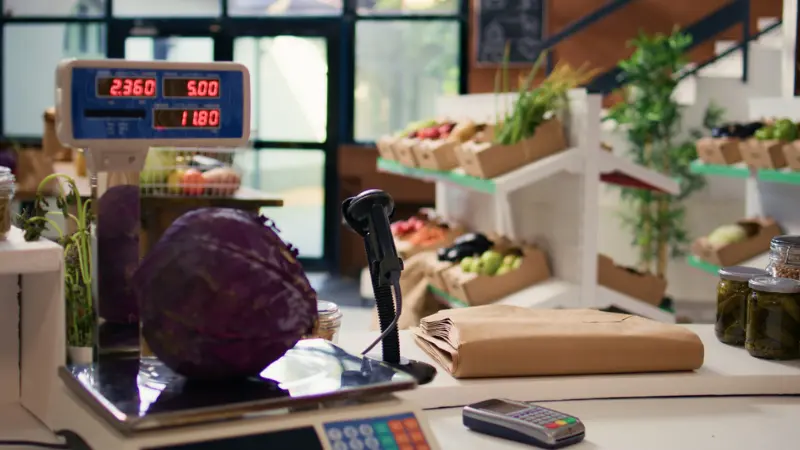
Fresh items cause the longest delays. Traditional scales pause the line while staff search codes. AI POS scales move faster. They keep checkout flow steady when traffic spikes.
Accuracy and Error Control
Manual systems rely on memory. AI POS scales add a second layer of control. They confirm the item before pricing.
Labor and Training Impact
Traditional scales need skilled cashiers, and training takes time. Turnover raises costs.
AI POS scales reduce this dependency. New staff reach accuracy faster.
POS Integration and Multi-Store Consistency
Traditional systems vary by location. Results depend on who works the register.
AI POS scales sync directly with POS systems. They apply the same logic in every store.
Scalability Across Growing Retail Operations
As stores grow, manual systems struggle to stay consistent. AI POS scales scale with the business. That makes them easier to manage across multiple locations.
This is why many retailers compare POS scale vs traditional scale choices at the operational level.
The real difference appears in speed, control, and long-term consistency when evaluating AI POS scale vs traditional weighing scale options.
Cost Comparison: Initial Cost vs Long-Term Spend
Retailers often compare scales by purchase price. That approach misses the real cost.
The right comparison looks at how each system affects spending over time, not just at install.
Traditional Weighing Scale Cost
Traditional weighing scales require a lower upfront investment. Most costs sit in physical equipment.
Direct costs usually include:
- Weighing scale hardware
- Basic POS connection
Software expenses stay minimal. Licensing costs remain low or non-existent. However, operating costs grow over time.
Hidden cost drivers include:
- Staff training: Cashiers must learn PLUs and product lookups
- Pricing mistakes: Look-alike items cause undercharges or overcharges
- Checkout delays: Slow fresh-item pricing increases labor hours
These costs increase as the store traffic grows and the staff turnover rises.
The scale stays cheap. The operation becomes expensive.
AI POS Scale Cost
An AI POS scale carries a higher initial cost. That cost covers both equipment and automation.
Upfront cost areas include:
- Scale with built-in camera
- AI software license
- POS system setup and testing
Ongoing costs may include:
- Software updates
- System monitoring
- Support services
The AI POS scale cost shifts spending forward.
More money goes into the setup. Less money goes into daily correction, retraining, and error recovery. For high-volume supermarkets, this shift changes the cost structure.
Total Cost of Ownership (TCO) Comparison
Year 1:
Traditional scales appear cheaper. AI systems cost more to deploy.
Years 2–3:
Training repeats. Errors continue. Labor hours increase with traffic on traditional systems.
Years 4–5:
AI POS scales often stabilize costs. Checkout speed improves. Error rates stay lower.
Labor dependence decreases. Traditional systems carry ongoing operational costs.
AI systems reduce them.
Accuracy Comparison: Manual PLUs vs AI Recognition
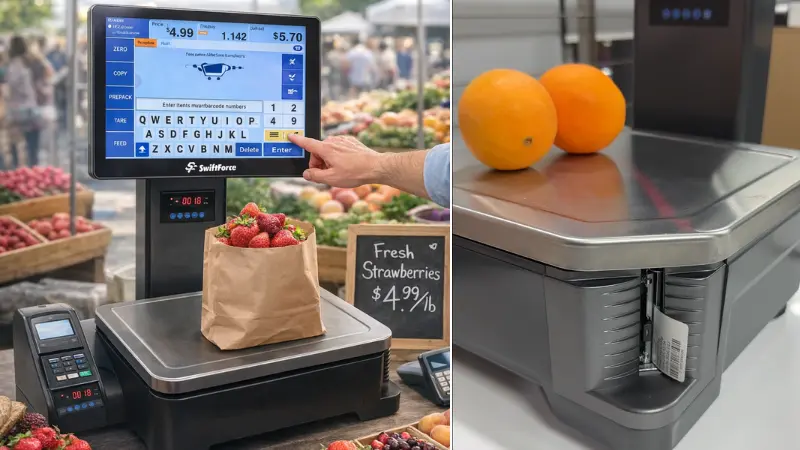
Accurate pricing matters in supermarkets. Errors cost money and slow checkout. This section explains where manual scales fall short and how AI POS scales improve accuracy.
Where Manual Scales Lose Accuracy
Traditional scales rely on cashiers to pick the right PLU code.
Manual entry struggles with new or seasonal items that staff may not know by heart.
During busy hours, staff fatigue increases the chance of a wrong code or a missed item.
Research shows that PLU or manual price entry faults can lead to measurable pricing errors in retail settings, which affects profitability and customer trust.
How AI POS Scales Improve Pricing Accuracy
AI POS scales combine visual recognition and weight checks to reduce these errors.
The system matches what it sees to a trained database of products. Top-tier AI scales can reach identification accuracy close to or above 99% in real retail tests.
Once the product is identified, the system confirms the weight and sends the correct SKU and price to the POS. This removes guesswork and lowers mis-scans.
Key accuracy improvements include:
- Visual + weight validation ensures the right item is chosen
- Fewer mis-scans mean fewer price mismatches
- Better shrink and fraud control as mismatches trigger alerts before completing the sale
These systems still let cashiers verify when needed, which keeps errors very low.
Business Impact
Higher pricing accuracy protects margins.
Fewer mistakes mean less lost revenue from undercharges and fewer refunds for customers. For procurement and operations teams, accuracy is not just about fewer mistakes. It ties directly into profitability, shrink control, and smoother store operations — especially during peak hours and when training new staff.
Checkout Speed & Labor Efficiency
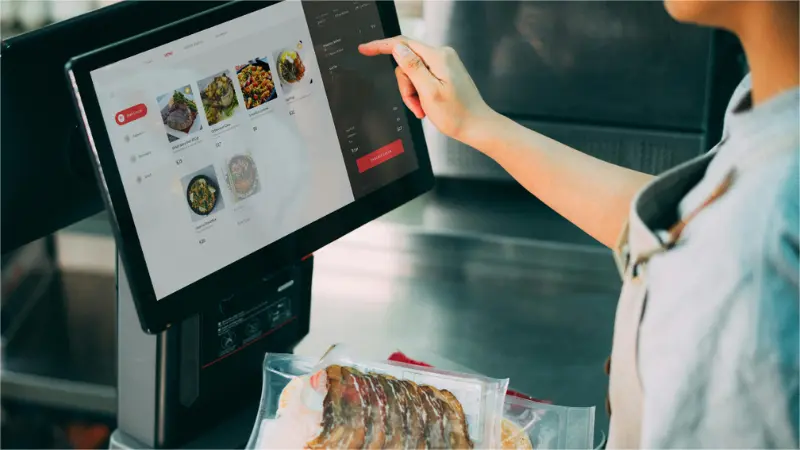
Checkout speed and labor use shape daily store performance. Faster lanes mean happier customers and lower labor costs. This section explains how AI POS scales improve speed and staffing in supermarkets.
Faster Fresh‑Item Checkout
Traditional fresh‑item pricing slows lines.
Cashiers must enter codes and wait for the POS to price each item. They identify items instantly and send prices to the POS without manual codes.
Many supermarkets using AI‑based checkout report up to 40% shorter wait times at fresh‑item lanes, which directly reduces queue length and bottlenecks.
Labor Impact
Staffing fresh lanes under traditional scales depends on experience.
New cashiers need hours of PLU training before they hit speed targets. That adds labor cost and scheduling complexity.
AI solutions have also been linked to overall labor cost reductions of up to 20% across checkout and store operations.
Peak Hour Performance
Peak hours magnify checkout inefficiencies. Long lines frustrate customers. They also force managers to increase headcount at the register.
AI checkout scales boost throughput.
ROI Analysis: When Does an AI POS Scale Pay Off?
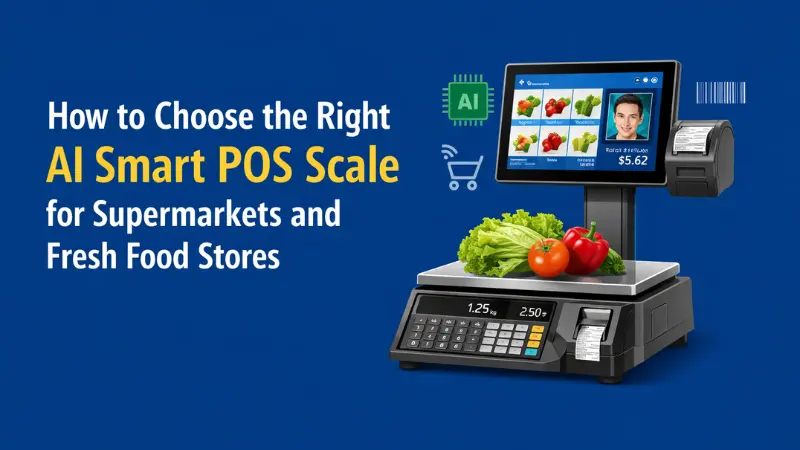
Supermarkets need more than features. They need a clear return on investment.
This section breaks down where AI POS scales generate real financial value.
Labor Cost Reduction
Labor is one of the highest ongoing costs in supermarkets. Faster onboarding cuts training costs and reduces downtime.
With a simpler checkout flow, staff can move into other tasks sooner, which adds value across the store.
Increased Checkout Throughput
Checkout throughput measures how many customers complete a sale in a given time.
Retailers using automated recognition at checkout have reported measurable queue speed improvements, leading to fewer abandoned purchases and higher customer satisfaction.
Reduced Errors & Shrinkage
Pricing errors affect margins and inventory accuracy. Wrong PLU entries or missed items lead to undercharges that shrink profit. AI systems also tighten control over shrinkage and fraud, especially in fresh departments where manual mistakes happen most.
Typical ROI Timeline for Supermarkets
Returns vary by store size, traffic, and labor costs.
However, many supermarkets see ROI within 12–24 months when AI scale benefits stack up.
Savings come from:
- Lower labor hours
- Faster throughput
- Fewer pricing mistakes
- Reduced shrink losses
This timeline is a guideline, not a guarantee.
It helps buying teams frame the investment in financial terms instead of features.
When evaluating ROI, decision‑makers should use real store data (labor rates, traffic counts, error rates) to model the impact for their location.
Why Supermarkets Are Moving to AI POS Scales
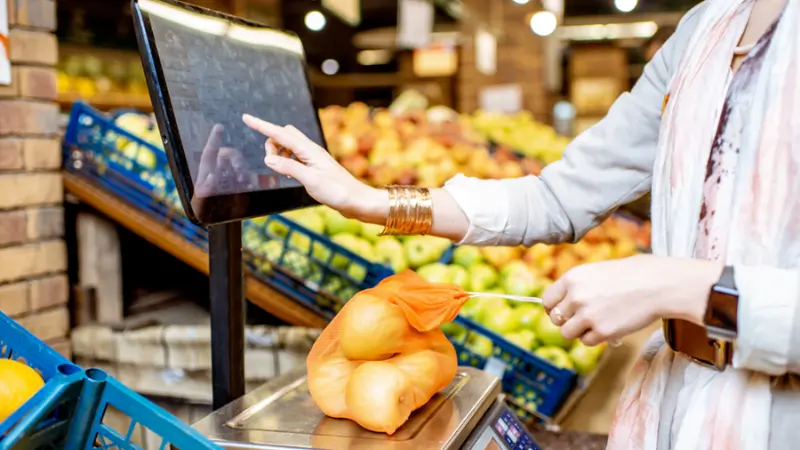
Supermarkets face rising labor costs, crowded fresh aisles, and customer demand for fast checkout. Manual weighing slows lanes and increases errors. AI POS scales help stores solve these operational challenges efficiently.
High-SKU Fresh Items
Produce, deli, and bakery departments have hundreds of non‑barcoded items. Traditional scales require manual PLU entry, slowing checkout and increasing mistakes. AI POS scales recognize items and price them instantly, reducing bottlenecks during peak hours.
Labor Pressure
Fresh-item lanes rely on skilled staff. Training new cashiers takes time and adds labor cost. AI scales cut manual input, shorten onboarding, and allow staff to focus on service.
Speed & Consistency
Shoppers expect fast checkout. AI scales improve throughput, shorten queues, and maintain uniform pricing across stores. Chains achieve consistent accuracy regardless of staff skill or location.
Who Adopts First
Mid-to-large grocery chains, urban supermarkets, and fresh-heavy formats benefit most. For stores looking at a weighing POS system for supermarkets or an AI POS scale for supermarkets, adoption delivers measurable efficiency, accuracy, and customer satisfaction.
Which Retailers Should Upgrade — And Which Can Wait
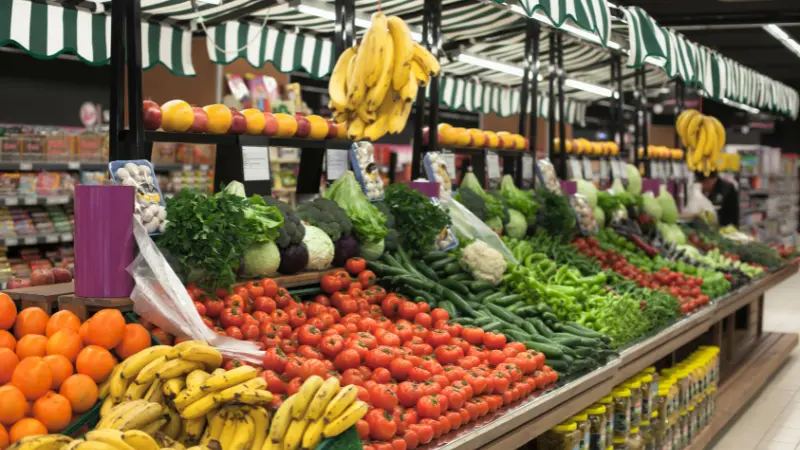
Not every store needs an AI POS scale. Choosing the right time depends on size, product mix, and volume.
Best Fit for AI POS Scales
Medium to Large Supermarkets
Stores with high traffic benefit most from faster checkout and reduced errors.
Fresh-Food Focused Store
Produce, deli, bakery, and bulk items create manual pricing challenges. AI recognition improves accuracy and speed.
Multi-Location Chains
AI scales standardize pricing and checkout quality across all stores, reducing training time and operational variation.
Retailers in these categories often see ROI within 12–24 months.
When Traditional Scales Still Make Sense
Very Small Stores
Low traffic means manual scales rarely slow down checkout.
Low Fresh-Item Volume
Stores selling mostly packaged goods or barcoded items do not require automated recognition.
Budget-Restricted Environments
If initial investment is a concern, traditional scales remain cost-effective while still functional.
Future Outlook: AI POS Scales in Smart Retail
AI technologies are expanding beyond simple scales.
New tools aim to reduce wait times, improve accuracy, and smooth the shopping journey.
Self‑Checkout Integration
Self‑checkout systems now use advanced AI to identify items automatically. Retailers report wider adoption across grocery stores as these systems reduce line delays and support staff during busy hours.
Smart Carts
Smart carts with onboard cameras and scales are emerging. This concept has moved from testing to early deployment in several U.S. supermarkets, showing how in‑aisle pricing and payment can evolve.
Semi‑Autonomous Lanes
Semi‑autonomous checkout lanes blend assisted and self‑checkout. AI handles item ID and pricing while staff monitor exceptions.
This approach improves speed without fully removing human oversight.
Why AI POS Scales Are Foundation Tech
AI POS scales build a data backbone for future checkout systems. They provide consistent item recognition and accurate pricing across formats.
This consistency supports:
- Data accuracy for inventory and sales
- Scalable automation across stores
- Modernized checkout flows that tie into self‑checkout and smart carts
As retailers adopt AI at scale, these systems will help unify checkout technology with broader store operations and customer expectations.
FAQs About AI POS Vs Traditional Checkout
What is an AI POS scale?
An AI POS scale combines automatic product recognition with weight measurement and POS checkout integration. It identifies items visually, verifies weight, and sends the correct price to the register, reducing manual input and errors.
How accurate are AI weighing POS scales?
Top AI POS scales reach 99% or higher accuracy for item identification and pricing. They combine visual recognition with weight validation to minimize mis-scans and pricing mistakes.
Are AI POS scales better than traditional weighing scales?
For fresh-heavy and medium-to-large supermarkets, AI scales improve speed, accuracy, and labor efficiency. Traditional scales still work for small or low-volume stores but cannot match AI systems in throughput or consistency.
How much does an AI POS scale cost?
Costs vary by model, integration, and software. Expect higher upfront investment than traditional scales, but lower labor and error costs make them financially beneficial over 12–24 months.
Are AI POS scales suitable for small supermarkets
Small stores with limited fresh items and low traffic may not need AI scales immediately. Traditional scales remain cost-effective until checkout complexity or volume justifies an upgrade.
Final Take: Future-Proof Your Checkout
AI POS scales make checkout faster, keep pricing consistent, and make your staff more resilient. They’re especially useful for stores that handle a lot of fresh items or have multiple locations. Traditional scales work for smaller or budget-limited formats but carry hidden operational costs.
Evaluate your store’s layout and SKU complexity. Begin with a controlled pilot to measure throughput, error reduction, and staff adaptability.
CTA: Explore POS Solutions for Your Retail Needs
If you want to modernize your checkout and reduce operational friction, SwiftForce can help you find the right POS solution for your store.
Get in touch to discuss your store setup and pilot options.
Let’s help you build a checkout system that works today—and grows with your business tomorrow.