
Every supermarket fights the same two pressures: long lines and thin labor coverage. These issues slow throughput and frustrate shoppers. Smart carts step in with built-in item detection, simple AI vision, and a screen for payments. One tool removes friction across the trip and keeps traffic moving. Chains that test smart carts report shorter checkout times, higher average spend, and better staff allocation.
Market studies show strong growth in this category as more retailers modernize their floors. This shift places smart carts at the center of store innovation plans.
What Is a Smart Cart? Core Tech & How It Works
A smart cart resembles a regular cart but features built-in tools that track items and facilitate checkout. It eliminates lane stops and provides shoppers with a smooth trip from entry to exit.
Core Components
Smart carts use small cameras, simple vision tools, and weight sensors to confirm each item. A barcode reader supports items that need manual scans. A touchscreen shows the running total and guides the shopper. A payment module lets customers pay in the cart. Wi-Fi or cellular links keep the cart connected to the store system.
Typical Workflows
Shoppers place an item in the cart. The cart detects it through cameras and weight checks. The screen updates the total and shows any offer. Shoppers scan a loyalty card on the screen. They exit through a cart lane, pay on the cart, and leave without stopping.
Simple Step View:
- Add items.
- Cart detects an item.
- Total updates.
- The shopper pays at the cart.
- Shopper exits.
Many vendors publicly describe this process in their technical pages, noting that multi-sensor checks help confirm item accuracy.
Benefit #1: Faster, Queue-Free Shopping
Smart carts cut wait time sharply. In a 2022 study comparing a smart-cart system with a standard barcode checkout, time per checkout dropped from 20 minutes to just 4 minutes.
Because carts recognize items as shoppers add them (via RFID, sensors, or vision), there is little or no need to line up at the register. Shoppers simply load, pay in the cart, and go.
That removes rush-hour pressure at front-end lanes. In stores using smart carts, throughput climbs during peak hours. Lines shrink. Staff spend less time handling payments and more time on the floor.
For retailers, this means better customer flow, fewer checkout chokepoints, and more consistent foot traffic handling. Planning for a “single-digit minute checkout” becomes realistic when smart carts are live.
Benefit #2: Improved Customer Experience & Convenience
Smart carts make shopping smoother, easier, and more enjoyable. They offer real-time cart totals, reduce errors, and integrate loyalty and offers, all in-store.
Key upsides for customers:
- They see the running total as they shop. No surprises at checkout.
- They avoid the common scanning mistakes at busy self-checkout lanes.
- They get personalized offers or coupons mid-shop.
- Many carts support loyalty-card integration for discounts or rewards.
- Families, seniors, or mobility-limited shoppers avoid long checkout lines.
Retailers often hear positive feedback from these shoppers, especially for ease and speed. These improvements boost satisfaction and drive adoption beyond early tech adopters — making smart carts a win for both business and customer.
Benefit #3: Increased Average Order Value (AOV) & Targeted Promotions
Smart carts don’t just speed up checkout…they help shoppers discover more. By offering relevant suggestions as people shop, carts often increase the size of each basket. This benefit is clearly evident in real data from personalized retail experiments.
Relevant In-Cart Suggestions
Each time a shopper adds an item, the cart can show related products or recipe ideas. This subtle nudge often leads to extra purchases. Personalized suggestions like these drove a 1–2% lift in total sales in one major grocery-retail study by McKinsey & Company.
Dynamic Promotions & Loyalty Offers at Shelf
Smart carts can trigger time-sensitive deals or bundle offers based on what’s in the cart. They can also apply loyalty discounts automatically at checkout. Retailers using such dynamic promotions report healthier “basket growth” than those relying on standard static discounts.
Why the AOV Lift Is Sustainable
Because suggestions and promotions are relevant and timely, shoppers respond without feeling pressured. Over time, the cart “learns” better patterns and recommendations. That builds trust, repeat use, and gradual uplift.
Takeaway for retailers: Smart carts create a subtle but powerful upsell channel. Expect modest but steady AOV increases, especially if you tie suggestions to loyalty data and stock availability.
Benefit #4: Better Store Operations, Labor Efficiency & Loss Prevention
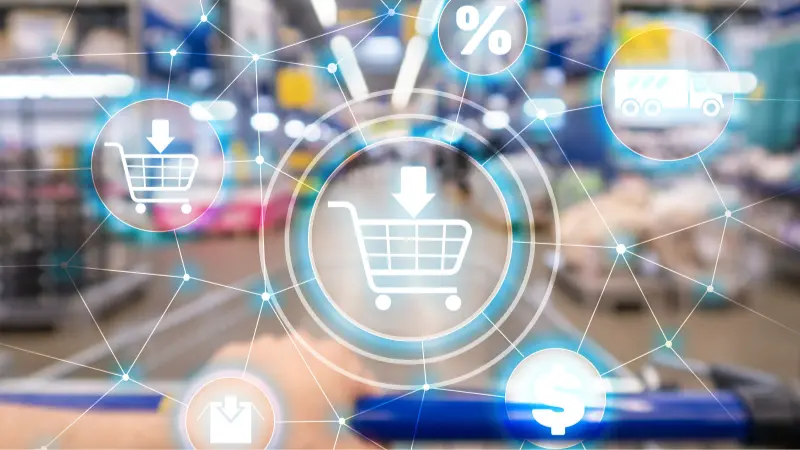
Smart carts streamline store operations. They let you reallocate staff, shrink labor costs, and lower losses …while keeping service levels high.
Labor Efficiency & Staff Reallocation
Because smart carts automate checkout, stores no longer need as many cashiers. Many retailers reassign those staff to service, shelf restocking, or customer assistance roles. This shift boosts efficiency. A Deloitte report highlights how retail automation (including smart checkout) can cut front-end staffing hours by up to 65%in grocery settings.
This reduces labor cost per transaction. It gives staff more time to assist shoppers on the floor. And it makes staffing more flexible during peak and off-peak times.
Loss Prevention & Inventory Accuracy
Smart carts often combine weight sensors, vision, and item-tracking to verify that what shoppers pay for matches what they take. That reduces ‘missed scan’ errors and shrinks. Automation also helps with real-time inventory logging — making daily reconciliation faster and more accurate.
What to Measure During a Pilot
If you run a pilot, track:
- Transactions per full-time-equivalent (FTE) staff
- Labor cost per transaction
- Number of scan errors or loss incidents
- Time taken for end-of-day inventory reconciliation
These metrics show how smart carts impact both cost and efficiency.
Benefit #5: Real-Time Data & In-Store Analytics
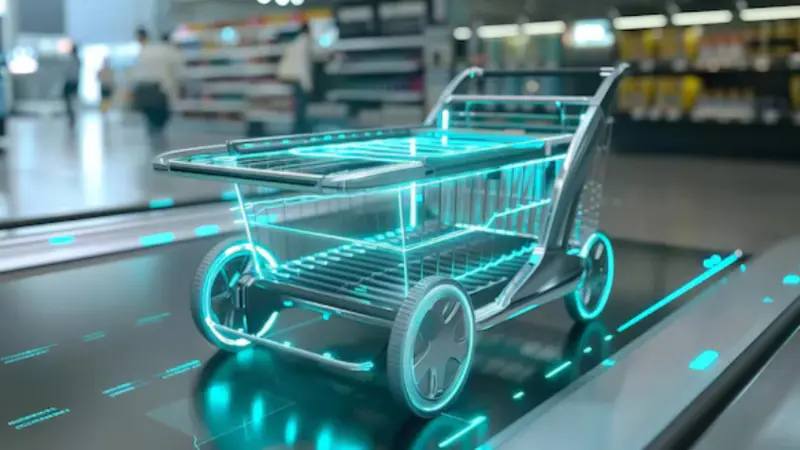
Smart carts give retailers fresh insight into how shoppers move, pause, and choose. This data helps teams fix weak spots fast and improve daily operations.
Better View of Customer Flow
Carts map paths, dwell times, and stop points. They reveal crowded zones and cold areas. This helps you adjust layout, shelf height, or display placement. Research shows that dwell time is strongly linked to shopper engagement and conversion.
Product Engagement & Micro A/B Testing
Carts track when shoppers view or add items. You can test two promotions at once. You see which one wins within hours, not weeks. This reduces guesswork and improves promo ROI.
Better Planograms & Replenishment
Real-time movement and pick data show which aisles run out first. Teams can restock faster and update planograms based on actual traffic, not assumptions.
Privacy Considerations
All tracking relies on anonymized patterns, not personal identity. Retailers keep focus on movement and behavior, not customers’ private details.
Smart Carts vs Traditional Carts & Self-Checkout
Smart carts change how shoppers move, choose, and pay. Traditional carts only hold items. Self-checkout speeds payment but still creates lines. The table below shows the core differences.
| Feature | Smart Carts | Traditional Carts | Self-Checkout |
|---|---|---|---|
| UX | Guided, simple | Basic only | Mixed experience |
| Speed | Fast, no lines | Slow at checkout | Faster, but queues form |
| Accuracy | High with checks | No checks | Depends on the user |
| Capital Cost | Moderate | Low | High |
| Maintenance | Tech upkeep | Minimal | Moderate |
| Data | Strong insights | None | Limited |
Smart carts work well in busy stores that want fewer lines and better data. Traditional carts still fit low-volume sites. Self-checkout helps with quick trips but still produces delays. Many chains use all three, with smart carts taking the lead role, cutting lines and improving flow.
Implementation Quick Guide for Retailers
A smart cart rollout works best when retailers start small and measure precise results. A focused pilot helps teams refine the flow before scaling.
Pilot Objectives & KPIs
Set simple targets. Track queue time, cart use rate, AOV, shrink, and transactions per staff hour. Record baseline numbers before the pilot.
Tech & Integration Checklist
Confirm POS links, loyalty data sync, stable Wi-Fi, and device charging plans. Test payments and receipts on day one.
Staff Training
Train floor teams to guide shoppers. Give simple scripts for common questions. Assign one tech lead per shift.
Store Layout
Widen the front area for smooth exits. Place carts near entry points. Keep charging docks close to staff zones.
Pilot Duration & Sample Sizes
Run pilots for six to eight weeks. Aim for a few hundred repeat shoppers to see clear patterns.
Failure Modes & Risk Mitigation
Watch for network drops, payment errors, and dead batteries. Fix issues fast. Keep a small fallback process ready.
This approach helps retailers adopt smart carts with less risk and faster learning.
Future Trends to Watch For AI Smart Carts
Smart carts will gain new features as stores push for faster trips and better insight.
Better Computer Vision
Models will detect items with higher accuracy. This will cut error checks and speed the trip.
App + Cart Ecosystems
Carts will link smoothly with store apps. Shoppers will sync lists, coupons, and past orders in seconds.
Connected Shelf + Cart
Shelves will talk to carts. Carts will guide shoppers to items, flag low stock, and show real-time offers.
Hybrid Cashierless Models
Stores will mix smart carts with light checkout gates. Shoppers will exit fast while stores keep firm control.
These trends will shape the next wave of AI smart carts and raise the value of in-store tech.
FAQs About AI Smart Carts
What is a smart cart?
A smart cart is a regular cart upgraded with cameras, sensors, and a simple screen. It helps shoppers add items, track totals, and pay without joining checkout lines. Retailers use these carts to speed trips and improve store flow.
How do smart carts work?
Smart carts identify items through cameras and weight checks. The cart updates the total on the screen as shoppers add or remove products. Payment happens on the cart, and shoppers exit through a quick verification point, not a staffed lane.
Do they really reduce checkout time?
Yes. Pilots show clear drops in queue times because shoppers complete payment on the cart. Most trips end with one quick exit scan. This keeps the front of the store clear and improves flow during peak hours.
Are smart carts better than self-checkout?
Often they are. Self-checkout still creates lines and needs staff to fix scanning mistakes. Smart carts remove the line entirely and reduce errors through built-in checks. They also give retailers better insight into shopper movement and engagement.
How much will they cost to deploy?
Costs depend on fleet size, features, support plans, and store layout. Most retailers request vendor quotes to compare options. Larger deployments usually lower the per-cart price and reduce service costs over time.
Will smart carts increase theft or shrink?
No. Smart carts reduce shrinkage through camera checks and weight detection. They flag mismatches fast and guide staff to review the issue. This improves accuracy compared to manual scanning or unattended self-checkout stations.
What KPIs should we measure in a pilot?
Track queue time, AOV, cart adoption, shrink, repeat use, and staff hours per transaction. Compare the results to your baseline. Use clear targets to judge impact and decide when to scale the rollout.
Final Take: This is The Best Time To Get AI Smart Carts For Your Store
Smart carts reduce front-end pressure, raise basket size, and produce steady in-store insight.
At the same time, they allow staff to shift focus from managing checkout lines to delivering higher-value customer service. These benefits align with the needs of modern grocery and high-traffic formats.
The best next move is a 4–8 week pilot in one busy store. Track two numbers closely: average order value and checkout time. Compare them with your baseline to judge real impact.
Ready to evaluate a pilot deployment?
If you’re considering AI smart carts for your store, the key is choosing a solution that integrates smoothly with your existing POS ecosystem and store layout.Please contact us to request a pilot assessment and discuss the implementation plan with our team. A structured pilot today can prevent rollout challenges tomorrow—and position your store for measurable gains.